 |
|
|
1 |
|
Go deep
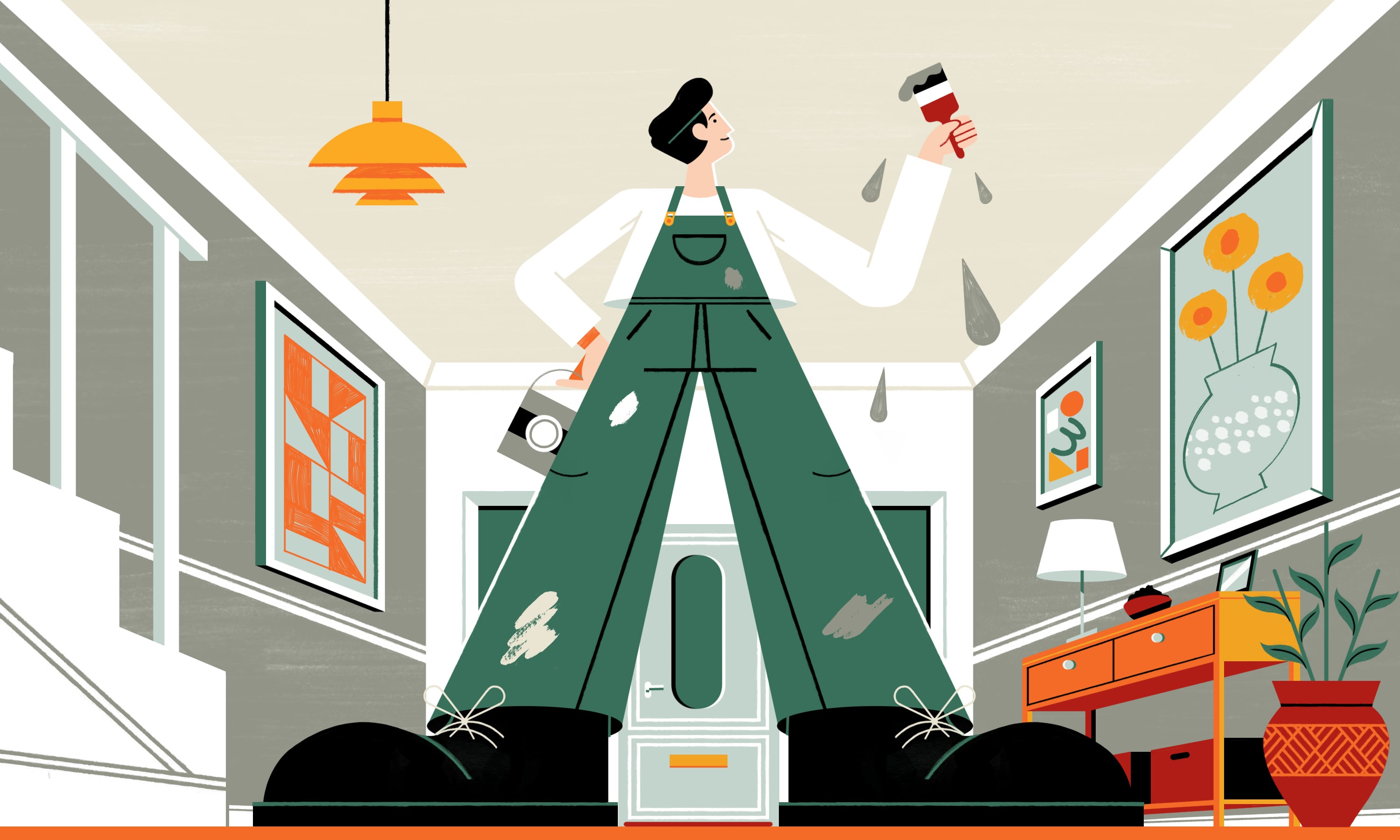
“The only moments in life when you’ll spend any amount of time in your hallway is when you’re a drunk university student sitting on the stairs, or you’re picking colours for it,” jokes Aaron Markwell, colour lead at Coat. He recommends choosing a colour slightly darker than the connecting rooms, but in the same tonal palette, as this deeper colour “will act as a frame for the rooms beyond it.”
Whatever you do, says interior designer Emma Neame, don’t try to lighten up a dark hallway by painting it white. “White pigments need UV to bounce the colour which isn’t possible in a dark space,” she explains. “Darker colours need less UV to show their true colour which can create a cosy entrance, so embrace the darkness.” It’s also important to think practically, says Markwell. “If you’re doing up your home, always decorate the hallway last – it’s the place that will get scuffed as you decorate other rooms.” |
|
2 |
|
Streamline your storage
Planning your hallway to make the “shedding” process as seamless as possible means you stand a chance of keeping it neat. A console table with baskets for shoes underneath, drawers for clutter and room for a lamp is a three-in-one solution, says interior designer Kate Guinness. “If there is no space for a console,” says Neame, “use a piece of reclaimed wood as a shelf to put things on.”
Don’t scrimp on the number of hooks in a hallway (hung at different heights if you have kids) says Zara Cowen, interior designer and founder of Huxley Home. She also suggests adding a pretty vintage letter rack to tidy away messy piles of post. “If I can I also like to add a shelf above a radiator in a hallway with nice brackets – it looks good and is an efficient use of space.” |
|
3 |
|
Find a step solution
Staircases can become unintended repositories for the stuff which hasn’t made it to your bedroom yet. If your front door faces the stairs, neaten things up by adding a staircase storage basket which can hide things until they are ready to be carted away, says Cowen. “You can buy baskets which mould to the shape of the stair”, she adds. |
|
4 |
|
Add a preloved lantern
“I have a beautiful mid-century pendant light I’m about to put in my hallway”, says Guinness, “It can really make the space. Choose something with plenty of glass that lets out a lot of light.”
Can’t add electricals? Try a plug-in wall light, says Neame. “They’re a great way to add light at different levels without the hassle of cutting into a wall.” |
|
|
|
5 |
|
Invest in a hard-wearing runner
This is a quick way to add layering and warmth to a tiled entrance. A sisal runner looks lovely in a hallway but can stain badly, so Guinness recommends getting a washable version by a brand like the Unnatural Flooring Company: “you can add a coloured leather trim which works with your scheme, and the fabric is indestructible.” If you’re able to, she adds, recessing a large piece of door mat into the floor looks smarter than having a loose one and is the best way to catch dirt. |
|
6 |
|
Hang tight
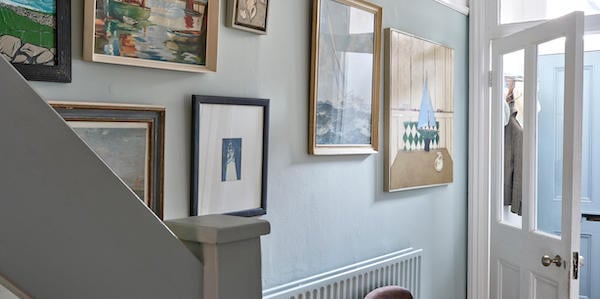
Lizzie Dixey of art sourcing service The Art Register recommends a split batten hanging system to ensure artwork hangs completely flush to the wall. Also, she adds, it’s important to choose art that works well viewed up close: “A lovely etching with fine mark-making can work really well”, she says, “or photography is great in a hallway.” |
|
7 |
|
Add something that sparks joy
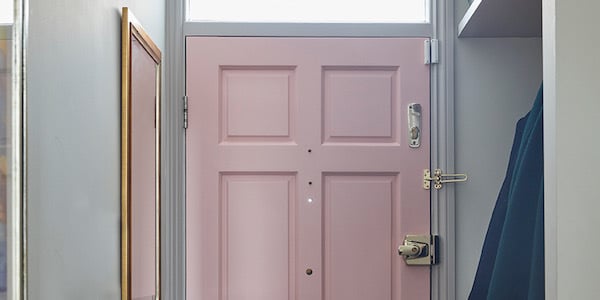
“This is the space you see first when entering your home and last when leaving so you need a feelgood factor”, says Neame. This could be a piece of artwork that makes you smile, a sentimental object, or “why not paint the back of your front door a colour that you love” says interior designer Sophie Pringle, “it will put a smile on your face every time you leave the house.” |
|
|
| |
|
| |
|
Meet the Maker: Kemi Lawson and Lara Senbanjo |
 |
One Christmas, Kemi Lawson went shopping for tree decorations, hoping to find angels which looked like her daughters, with afro hair and black skin. The search was fruitless.“I desperately realised that the lack of representation I felt growing up was now being passed on to them,” she says. The experience inspired Lawson to leave her investment banking job and, together with her equally motivated sister Lara, found The Cornrow, a curated platform of lifestyle and homewares by Black makers, which also features pieces made by the sisters themselves. |
Our design aesthetic is best described as … Afro-Aristo meets Caribbean Nan chic. It speaks to our dual heritage (our dad is Nigerian, our mum’s heritage is Jamaican), and shows we want to move away from traditional rural depictions of the African aesthetic. It also pays homage to the West Indian front room, a now iconic interior style, honoured with a permanent installation at the Museum of the Home and in whose design aesthetic we find so much inspiration and delight. |
The first thing we ever made was … macrame planters – we loved the meditative process of making them and the transformation of a humble piece of rope into a fabulous setting for a plant. |
We’re inspired by … the histories of our African and Caribbean heritage, be it the pioneers of the Windrush generation, the powerful African queens of the Benin Kingdom, or the Yoruba goddesses like Oshun. |
We love working with … adire, a centuries old textile tradition in Nigeria. The name translates to tie and dye, and it’s a wonderful, vibrant indigo-coloured fabric made by artisans using methods pretty much unchanged through the ages. We love finding new and modern ways to work with it, from duvet covers to heart-shaped cushions. It’s a great way to add a beautiful aesthetic to your home while supporting an ancient tradition in danger of dying out. |
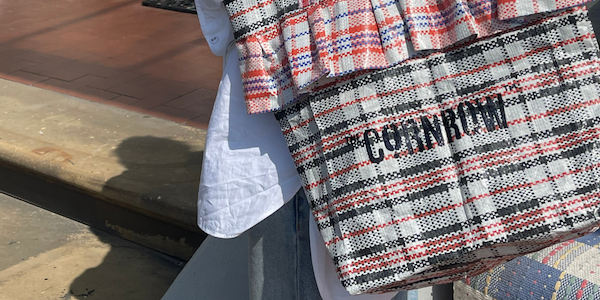 |
We are particularly proud of … our latest creation, the Nana bag, made out a fabric which is pretty much iconic to people in West Africa and the diaspora, found on every market stall. In Nigeria, it had the terrible name of “Ghana must go”, referring to a shameful moment in Nigeria’s history in the 1980s when Ghanaians used this bag to pack up their belongings as they were forcibly evicted from Nigeria. We have proudly repurposed the bag, modernised it and given it a new name. We’re currently working on another limited edition batch. |
Our own homes will never be without … art on the walls, from sentimental pieces such as framed letters and photographs, to prints and paintings by our favourite artists. |
A beautifully designed home should always have … soul! A home can be beautifully designed on paper but lack anything that has a real connection to the owner. As the great Diana Vreeland said, “good taste or bad taste it does not matter. No taste is what I’m against”. |
In the future we want to … be like Liberty, but Liberty Wakanda [the fictional state from Marvel’s Black Panther comics and films]! Our dream is that retail will only be part of our story – we want Black stories and history to take centre stage in every product. |
For more information on The Cornrow, visit their website here. |
|
|
| |
|
|
| Be part of the buzz at Coppermaker Square |
 |
Right in the heart of Stratford, one of London’s most exciting neighbourhoods, Coppermaker Square is reinventing renting. These aren’t just high-quality apartments with exceptional views, but a modern, holistic approach to city living.
|
|
|
|

|
Home Planet |
Design that doesn’t cost the earth |
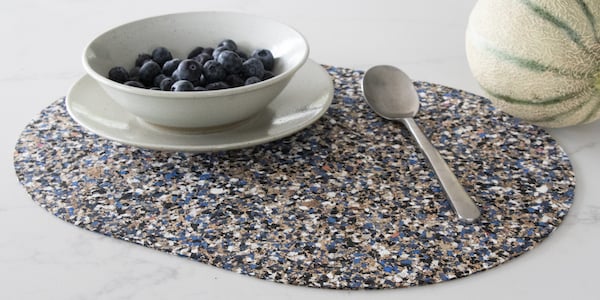 |
The Beach Clean collection by Liga offers a double hit of planet-friendly materials, made from sustainable cork, which can be harvested from trees without cutting them down, and recycled ocean plastic. Did we mention they’re also very pretty?
Above: Beach Clean Round Placemat set, £28, by Liga |
|
|
| |
|
Dream Pad: An Australian stylist’s eclectic California home |
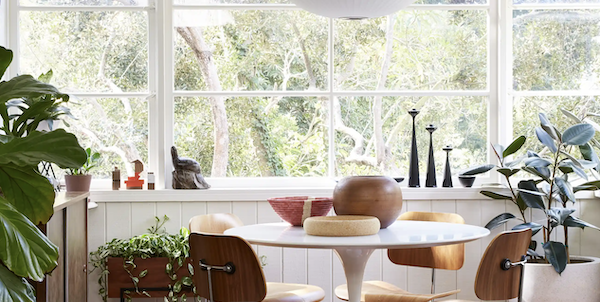 |
From the Guardian archive: When designer Marcus Hay swapped New York City for Laguna Beach, he snapped up this gem of a house once owned by a famous suffragette. His gentle renovation blends a love of mid-century furniture with relaxed west coast style. When can we move in? |
|
|
| |
|
This Old Thing: Vintage crockery |
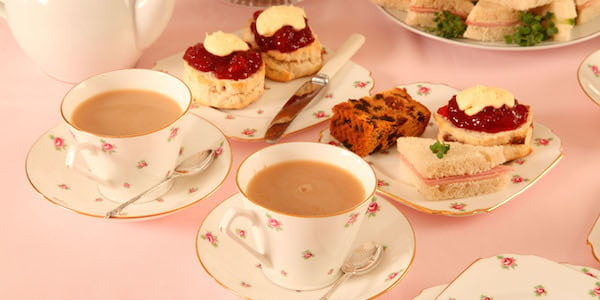 |
Paula Sutton, founder of Hill House Vintage, on the smart way to hunt for a preloved piece
“There is a certain type of romance to be found in using proper crockery for even the humblest sandwich. Tea taken in a china cup and saucer can instantly elevate the experience to something glamorous and finding beauty in the everyday is something we all should aim for.
“As with all things old, look for hairline cracks or chipped edges and discard anything that might fall apart. Bone china is the most valuable and even more so if it comes with a date mark from the manufacturer. Look for the manufacturer’s stamp on the bottom of your plates or cups – checking to see whether it is painted, impressed or stamped can give you an idea of the time period during which when your vintage crockery may have been made. Popular collectible china brands with recognisable patterns include Wedgewood, Royal Worcester, Spode, Aynsley, Roal Albert and Royal Copenhagan among others.
“However, so much is down to personal taste when it comes to the print, colour and pattern. If in doubt, start your collection with blue and whites. It’s a popular and elegant colour combination with the added advantage that it can be mixed and matched and looks good used both formally and informally. Remember that colourful floral prints don’t need to imply granny chic – unless you want it to! There are also more graphic prints or solid colours to be found which can add a modern edge to your table setting – especially when styled against a crisp white tablecloth.” |
|
|
| |
| Advertisement |
|
 |
|

|
Inside issue four |
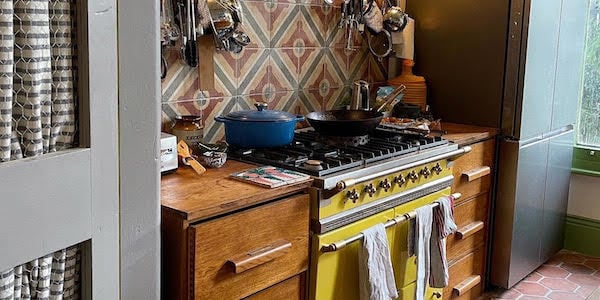 |
Next week: everything you need to know about giving the kitchen a style upgrade. Plus: the art of choosing the right side table. |
|
|
| |
|






No comments:
Post a Comment
Keep a civil tongue.