 |
|
|
1 |
|
Make it work hard
“Of all the work we’ve done on our house, my biggest regret is not installing a utility room, but I have a very clear vision for one in my head”, says interiors lover Jen Rothbury, who shares DIY home tips with 190,000 followers via her Instagram account @Crack_The_Shutters. Jen’s fantasy utility must-haves: a washer and dryer stacked on top of each other with a pull-out drawer between the two for sorting laundry; a fold-out ironing board; and a deep Belfast sink for rinsing mud-covered or stained clothes. Rothbury says the ideal utility room should be a backstage area for life in the house, “where all the mess can happen out of sight.”
Ideally, every inch of wall and cupboard space should be used, says interior designer Sophie Pringle. “A lot of handheld vacuums come with a wall mount that can be plugged in so it’s always charging,” she explains. “You can also hang mops and brooms on the back of cupboard doors, and roll towels into baskets.” |
|
2 |
|
Go for bold
You can have any colour so long as it’s not white, says interior designer Kate Guinness. “This is such a practical room I think it’s important to have fun with the decoration. Paint the walls and cabinetry a strong colour and lay chequerboard lino tiles on the floor – I’ve just put bright red and blue ones in my laundry room.” Aaron Markwell, colour lead at Coat, agrees. “It’s a super boring space so go wild, he says. “Use a wallpaper you love then pull out a colour from it to paint the cabinetry.”
As it’s a smaller space, you can also embrace darker shades which might be overpowering elsewhere, says Rothbury. “I think dark greens, aged brass and exposed brick herringbone floors look lovely in a utility room,” she says. If you can’t afford under-counter cupboards, lean into the rustic look with a striped curtain. |
|
3 |
|
Be practical with your flooring choice
“We favour marmoleum for the floor in a utility”, says interior designer Sarah Spencer Ashworth. The lino alternative, made from natural and recycled materials, “is easy to clean, soft underfoot and sustainable,” she says. “The utility room also lends itself to a patterned floor tile,” says Grazziella Wilson, head of creative at stone and tile brand Ca Pietra, who recommends porcelain or ceramic as another practical choice. “Most utility rooms are small so if you’re also going for a wall tile then opt for something glossy to bounce light around the space” she adds. |
|
 |
4 |
|
Dry out in style
Maximise drying space – and give the room a rustic farmhouse feel – by hanging a Sheila Maid from the ceiling. These come in an array of sizes and are a great way to cut back on the environmental and energy-bill impact of a tumble dryer, says interior designer Zara Cowen. She also suggests “installing an electric radiator on your back wall which runs on a timer [and] can also help clothing dry”. If you don’t have a utility room, the dead space above a stairwell is another good place for a ceiling-mounted drying rack, as it uses heat rising from the ground floor. |
|
|
5 |
|
Go vintage with storage
Open shelving in a utility makes use of wall space and puts things within easy reach. Make them look nice with pretty storage solutions – vintage biscuit tins for cloths, glass bottles to decant fabric softener into, or tall seagrass baskets to hide cleaning products. “I love the look of amber glass bottles, and Black and Barn also do nice labels,” says Rothbury. She’s also a fan of “pretty wooden scrubbing brushes which you can hang on pegs behind the sink.” |
|
6 |
|
Think like a German
Having a washing machine in the kitchen is a curiously British habit (the Germans put theirs in the bathroom, the Americans tend to have their laundry rooms upstairs) so if you’re planning to create a new utility, don’t feel like you’re confined to the ground floor. “If we are staging a total renovation we would always look to relocate the utility upstairs rather than down – the majority of washing is on a cycle between bedroom and utility so it’s far better to have it closer,” says interior designer Sarah Spencer Ashworth. |
|
|
| |
|
| |
|
Meet the Maker: Amechi Mandi |
 |
Before moving into furniture design, Amechi Mandi cut his teeth in fashion. The London-based founder of the brand Amechi says the experience of working as a stylist, buyer and creative director “honed his eye”, and taught him the importance of bringing “meaning, depth and purpose” to his work. His pivot to interiors – partly driven by a dissatisfaction at the selection of west African-inspired home decor on offer – draws on his Cameroonian and Nigerian heritage, and aims to celebrate and educate customers about indigenous textiles. |
If I wasn’t a designer I would be ... an anthropologist. |
Great design should always be … practical and purposeful. |
I’m inspired by … many things! Beauty, music, silhouettes, shadows, nature, colour, art, design, traditional African cultures, film, architecture and, and, and … |
 |
As an emerging brand … I am being recognised for the beaded pattern in my textiles. Although this is not what was planned from the beginning, I am going with the flow and working on other products with this in mind – beading offers a lot of possibilities with colours and shapes. |
The most precious thing I own is … a boubou [wide-sleeved robe worn across west Africa]. It was a present given to me by a special person in my life around 25 years ago, and I have only worn it about four times. |
No home should be without … love and harmony. |
My favourite room in my own home is … my bedroom, the only place where I can meditate and focus on the present. |
In the future I want to … create more product ranges, work on projects in Africa, and expand into interior design. |
For more information on Amechi, visit his website here. |
|
|
| |
|
|
| Be part of the buzz at Coppermaker Square |
 |
Right in the heart of Stratford, one of London’s most exciting neighbourhoods, Coppermaker Square is reinventing renting. These aren’t just high-quality apartments with exceptional views, but a modern, holistic approach to city living.
|
|
|
|

|
They’ve Got Great Taste |
Your dose of Insta-inspiration. This week: The cream of the DIY crop |
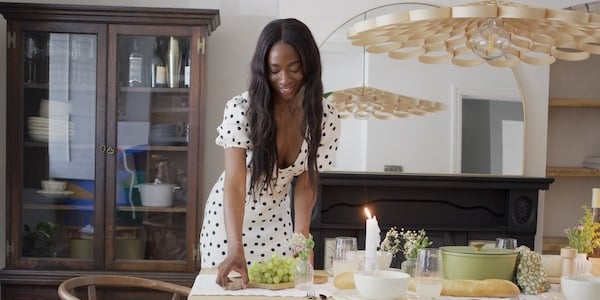 |
@_LivMadeline – Liv (above) has taken her London ex-council flat and turned it into a neutral oasis of calm. Her DIY wall panelling is a lesson in how to turn a plain room into something special.
@MyTinyEstate – Never mind hanging the odd picture - how about restoring a 500-year-old Warwickshire estate? Follow Dean Poulton and Borja De Maqua as they take on the ultimate DIY project, from lime plastering the walls to repairing the house’s 70 windows. This is clearly a labour of love: the back door alone took two months to finish.
@GirlAndADrill – Can’t afford a bespoke piece of furniture? Susie, a self-proclaimed champion of “DIY for the underdogs”, shares videos of thrifty design hacks from her Scottish home, including how to repaint a sofa (yes, it’s a thing).
@Rona_Renovation – Nadine and Julius took on a house an estate agent might politely say had “scope for modernisation”, and spent the lockdown doing it up. There is very little this practical pair haven’t turned their hands to, and the result is sleek and stylish. Next up? The garden room. |
|
|
| |
|
Dream Pad: A stylish Copenhagen home |
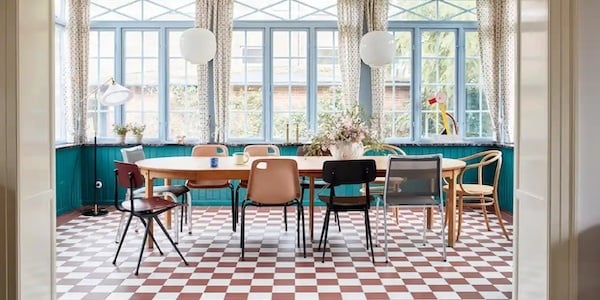 |
From the Guardian archive: The founders of fashion brand Ganni have turned their impeccable eye to this Copenhagen house, with signature splashes of colour, pattern and ruffles. |
|
|
| |
|
This Old Thing: Taps |
 |
Paula Sutton, founder of Hill House Vintage, on the smart way to hunt for a preloved piece
“I was once reassured by a friendly handyman who had come to fix a leak, that I need not fear as he would sort out my need for a new kitchen tap with a brand-new stainless steel one he had going spare at home. He meant well, and was rather perplexed when I declined his kind offer. Taps may be functional, but they are also one of those finishing touches that can change the style and look of a kitchen, bathroom or utility area and can therefore, when your preference is for the quirks of old and vintage, are never interchangeable with modern functional shapes.
“For sinks, I like the traditional look of high-rise capstan cross-headed pillar taps, with their own valves to control the flow of water, rather than mixing. However, with vintage there are many styles to choose from, including everything from freestanding standpipe taps on supports to suit free-standing baths, to Edwardian handheld shower mixer taps, Victorian jumbo-sized basin taps, and stylishly graphic Art Deco designs. Whatever the provenance, I like mine large and chunky and made from original sanitaryware metals such as brass, nickel and bronze with a genuine characterful surface patina.
“When it comes to reclaimed, refurbished and antique taps, the scale and finish can dictate whether your space looks modern and unique or traditionally authentic to the period of a property. Search in local salvage yards, and on speciality sites such as English Salvage. Don’t be put off if you stumble across something particularly beautiful but battered-looking during your search, or if you’ve inherited old examples in an old property.
"There are plenty of companies that specialise in polishing and replating taps from most eras, and there really shouldn’t be any need for old taps to be thrown on the scrapheap. If your taste is more contemporary, do remember that vintage doesn’t always mean a classically traditional look. Classic designs can be cleverly incorporated into modern schemes to create unique and functional areas, too." |
|
|
| |
| Advertisement |
|
 |
|

|
Inside issue eight |
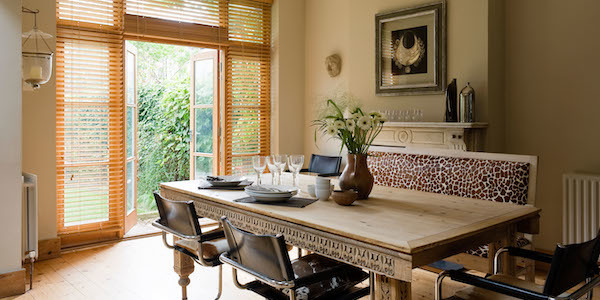 |
In the final instalment of House to Home, we take on the dining room. Plus: 100% recycled homeware you will 100% love. |
|
|
| |
|


No comments:
Post a Comment
Keep a civil tongue.