Travel impact of the US-Iran war
|
Turkey, Romania and Hungary are out – while Albania, North Macedonia, Serbia and Slovenia are in.
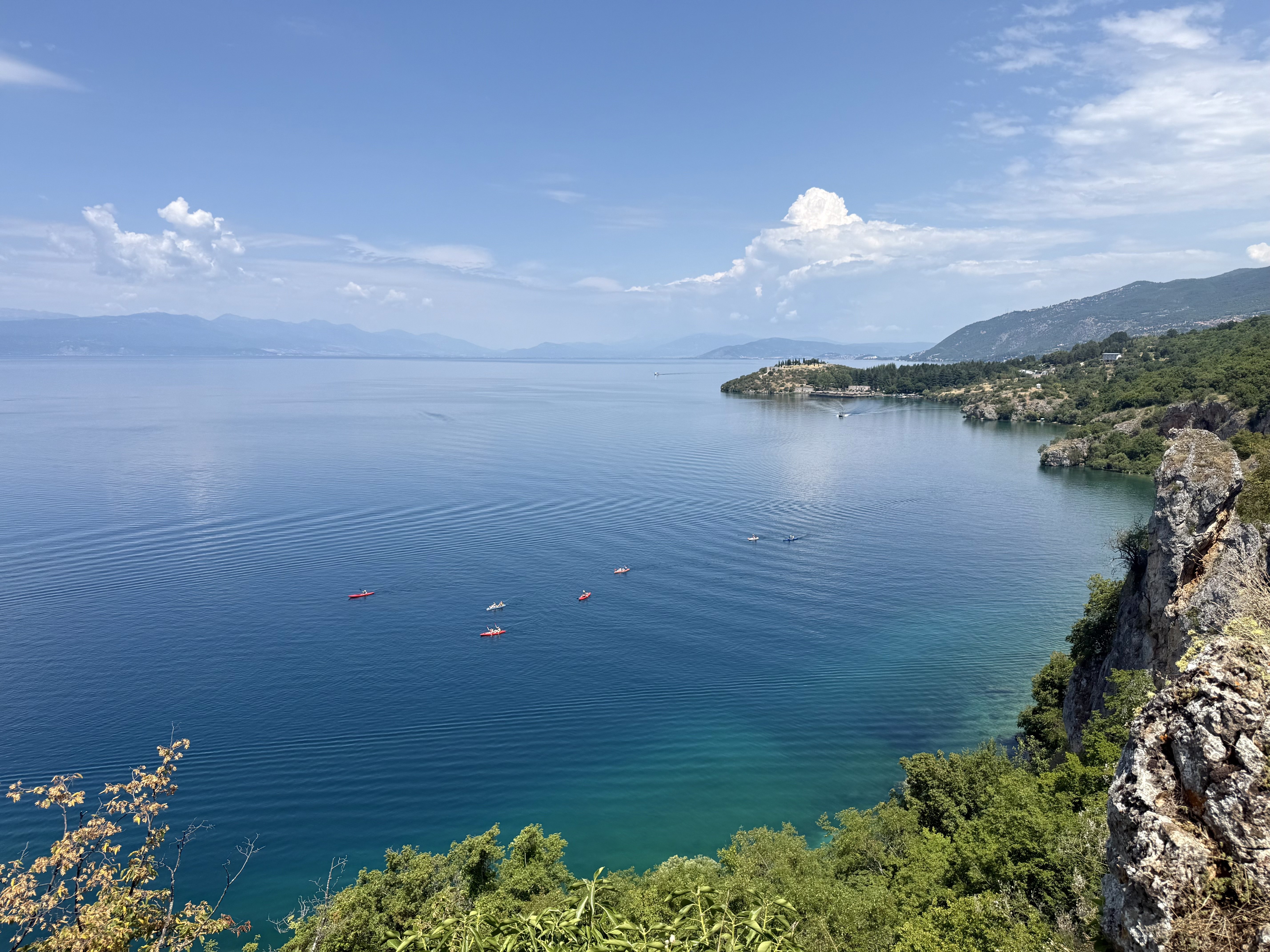
Reading the latest Eurocontrol numbers on travel to Europe, it seems that western Balkans countries are proving increasingly attractive to travellers this summer, while many turn away from nations to the east. Europe’s air traffic management coordinator Eurocontrol released data last week showing that Europe experienced record air traffic this summer – with an average of 35,959 daily flights – but that that traffic distribution was “influenced throughout summer 2026 by the Middle East crisis”. It reported that tensions in the region contributed to lower traffic to Bulgaria, Hungary, Romania and Turkey, but a significant increase in traffic to Albania, Croatia, Cyprus, Greece, Montenegro, North Macedonia, Serbia and Slovenia, as well as destinations in southwest Europe. The rise of tourism to the Balkans this summer does not come as much of a surprise. Many countries in the region are realising the value of the foreign traveller, and are investing in tourist infrastructure, while tour operators are increasing itineraries to previously overlooked nations; yet the link to war in the Middle East is interesting. Beyond concerns over safety, which can translate into an aversion to visiting countries in proximity to the Middle East (which I suspect is part of the reason for the drop in travel to Turkey), conflict will impact the way we travel in a range of ways. Since the US and Israel launched strikes on Iran in February, sparking a war that is sadly still rumbling on today, the cost of jet fuel has surged, airlines have reduced capacity, and flight routes have been altered, suspended or cancelled.
Looking beyond Europe, our travel habits have changed globally. Inevitably, travel to the Middle East has been dealt a hammer blow. Already struggling to attract tourists due to ongoing instability in the region, Jordan’s visitor numbers have dwindled yet further, while Lebanon’s tourism industry – which in 2025, was showing signs of revival – has once again been stymied. Although by this summer, the UK Foreign Office had lifted its advisories “against all but essential travel” to countries like the UAE, Oman and Jordan, reduced flights and shaken traveller confidence have kept visitor numbers below pre-war levels – despite many Gulf countries being at pains to reassure travellers they are safe and welcoming. This week, British Airways revealed that it will not be running its London to Abu Dhabi route for the 2026/27 winter season, and will not start its Dubai route until later than usual.
The impact of instability in the Middle East has been felt far beyond the region. The war initially had a significant effect on travel to Asia, largely due to the fact many destinations are served by the Gulf carriers (Etihad, Emirates and Qatar), which connect in the hubs of Doha, Dubai and Abu Dhabi. Figures from UN Tourism’s World Tourism Barometer show that while in the first six months of the year, the greatest fall in global tourism was experienced in the Middle East (22 per cent), South Asia and Southeast Asia recorded declines of five per cent and one per cent, respectively, when compared with the same period in 2025. Nick Pulley, founder of tour operator Selective Asia, told me that the company saw bookings drop significantly in April and May, falling by as much as 50 to 60 per cent, especially to countries served mainly by Middle Eastern carriers, such as Nepal and Bhutan. He noted that destinations in northeast Asia – including South Korea and Japan – proved more resilient, since they can also be reached fairly easily by flying west and avoiding Middle East airspace. The UN Tourism data actually showed a three per cent growth in global tourism to northeast Asia in the first half of this year.
Indian Ocean destinations popular with Brits, like the Maldives and Sri Lanka, also suffered initially. In the weeks following the start of the war, I spoke with Sun Siyam, who own five resorts in the Maldives, and they reflected on how much harder it had become for UK travellers to visit Indian Ocean destinations with the Foreign Office advice against all but essential travel. They have since told me that they had 60 per cent occupancy over Easter when they would usually expect over 90 per cent. However, since the advice was lifted, it appears that travellers have returned – occupancy has risen to 80 per cent across their resorts in the Maldives, including the summer months which is low season. Similarly, Nick told me that travel has bounced back to Asia, although with some changes. He noted that travellers now appear to prefer well-known destinations like Thailand, Vietnam and Malaysia. It seems that in times of crisis, Brits reach for familiarity.
It would be logical to expect tourism to have increased to countries across the Atlantic – destinations not reliant on Gulf carriers or connecting through Middle East hubs. It’s tricky to assess the impact on North America as we need to factor in the pull factor of the World Cup this summer (and the push factor of Trumpian politics when considering the United States), but it’s very interesting to see a surge in travel to South and Central America. Brazil is anticipating sky-high tourist numbers for 2026, reporting 121,990 British tourists so far between January and July. This is an increase of 11.61 per cent compared to the same period in 2025 and the second highest number they have recorded, just behind 2014, when Brazil hosted the World Cup. Peru also looks set for a bumper year, having welcomed 43,918 UK tourists from January to July 2026, an increase of 12 per cent compared to the same period in 2025. UK visitor numbers to Chile are on track for a record 2026, with January-July arrivals already ahead of any previous year, including the pre-pandemic peak of 2019. I also spoke with Joanna Reeve, the general manager for UK and Ireland at tour operator Intrepid Travel, and she said the company had seen an increase in bookings for countries like Peru and Guatemala alongside Costa Rica, which is up 32 per cent for them this year.
Looking back to Europe, Joanna said that Brits have also shown more interest in holidays closer to home in 2026, and postponing their longer-haul holidays to 2027. She told me: “Travellers are loving more active holidays in places like Albania, Slovenia and Norway and sailing in Greece – which are all up this year for us, compared to the same period last year.” She added: “While demand for travel has remained steady from Brits over the past six months, there’s definitely been a change in where they travel.”
|
North Macedonia has become an increasingly popular tourist destination
|
|
|
|
|
Eurostar to launch double-decker cocktail bars on new trains
|
|
|
|
|
|
Free entry to some of England’s top attractions this weekend
|
|
|
|
|
|
New Soho House to open 45 minutes outside central London
|
|
|
|
|
|
First look as Celebrity Cruises floats out debut river ship
|
|
|
|
|
|
These 10 cities are among Europe's most budget-friendly places for an escape this year
|
|
|
|
|
On board the Rocky Mountaineer, Joanna Whitehead discovers a perfect vantage point of British Columbia
|
|
|
|
|
The youthful-feeling five-star Patina Osaka is bringing a serious injection of contemporary chic to the city
|
|
|
|
|
Would you fly to the Middle East this winter?
|
|
|
|
As British Airways confirms that flights will not return to Abu Dhabi until winter 2027, are you still planning to take off for hotspots in the region in search of some winter sun?
|
|
|
|
|
It seems there’s near-universal agreement on last week’s poll. Following three major technical failures by the UK’s National Air Traffic Services (Nats) in four years, we asked if you thought airports and aviation authorities should build stronger contingency plans to provide support during cancellations and delays – just 4 per cent of you said no, meaning a resounding 96 per cent want to see proper crisis planning in place.
|
|
|
|
|
Now that the weather is cooling down, many of us are busy planning trips to warmer climes. We may have moaned about the heatwaves, but grey skies and rain can naturally conjure up a moan or two as well.
If you’re lucky enough to be jetting off to sunnier shores, our roundup of the best body sunscreens may be of interest. Looking for great-value luggage? Dunelm’s set of hard-shell suitcases has been reduced to under £50. And if you need to stay entertained while travelling, there’s currently £150 off the Kindle Scribe for a limited time. It’s a handy all-in-one device for both reading and note-taking. Don’t forget to pack a travel adaptor, either, to keep all your electronics charged. Available from £14, this model is one of our testers’ favourite budget options.
Meanwhile, if you’re using autumn as an excuse to book a UK break before the weather gets really cold, there are plenty of handy travel accessories to consider. Sweaty Betty’s weekend bag is currently better than half price, making it a great option for a short hotel stay. Or, if you’re planning to brave the chilly UK weather, Sync Beauty’s lip-care set is ideal for travelling and designed to help prevent pesky chapped lips.
For longer car or train journeys, our experts have rounded up the 15 best flasks for keeping your drinks hot or cold on the go. And if you need some inspiration for a staycation, Lonely Planet’s Experience Great Britain is currently reduced to under £15.
|
|
|
EES ‘travel chaos’? Not so much
|
Over the past couple of weeks I have seen a number of headlines warning of impending doom for travel. After the European Commission ended the flexibility on suspending the entry exit system (EES) at the borders earlier, articles have told us that “airport chaos looms” and the scheme “will cause travel misery”. Although I don’t think any of us would consider the rollout of EES a success – especially not those passengers who missed their flights due to long queues at border control – I am loath to cause undue worry by forecasting “chaos”. Yes, we have seen longer queues, and yes, it is wildly frustrating that we have these extra checks at borders. I’m also keen not to downplay how stressful (not to mention expensive) it must have been for those passengers who did miss their flights. However, these were, fortunately, just a handful of cases.
There have been reports that nine countries have been allowed to further delay implementing the scheme – although I would note that we have not received confirmation of this from the European Commission. However, I have also heard from two colleagues this week who have taken trips to Schengen Area countries that are not on this list (Austria and Spain) that the EES process was not too horrific. One who has just returned from Seville told me it took him around ten minutes, while another who is currently in the Austrian Alps said it was around 90 minutes – which was inconvenient but not debilitating.
I’m concerned that I have heard from several readers who have been spooked about travelling to Schengen Area countries. While I think it is prudent to be aware that there may be longer queues and to plan accordingly by leaving extra time at the airport, I would not let EES put me off visiting the Schengen Area. With some exceptions, travel to European countries is still relatively smooth.
Earlier this year, our travel writer Amelia helpfully pulled together a list of European countries that don’t have EES (and she has given it an update this week), so if you’re still nervous about border queues, rather than swearing off Europe travel, I would suggest taking a look at her round-up for some inspiration.
Read our list of European countries that do not have EES
|
|
|
|
|
From road trips to rooftop resets and beach days that turn into sunset dinners, the Virgin Atlantic Holidays sale is now on. Future you will thank you. If not now, when?
|
|
|
|
|
Explore volcanic landscapes, sun-soaked coastlines, colourful hilltop villages and more with these deals from Fred Olsen Cruise Lines. On board, enjoy full-board dining, a wealth of entertainment and more. Find out more.
|
|
|
|
|
Stay in the city centre at the popular Leonardo Hotel Leeds, with a full English breakfast and a bottle of prosecco included.
|
|
|
|
|
|
Discover Vietnam’s breathtaking beauty for less with Exoticca's package tours, including flights, hotels, transfers, excursions, meals and more.
|
|
|
|
Swap the Swiss Alps for the Cairngorms
|
If you don’t fancy getting on a plane for your autumn break, I would suggest you browse travel writer Hayley Spencer’s list of places to visit in the UK this shoulder season. This week Hayley shared the swaps she’d make if choosing a UK break over a European one. These include visiting the Isle of Wight rather than the Italian Riviera – here you’ll find “hyper-local cuisine and rugged beaches”, with plenty of restaurants to impress even the most discerning palates. For those who adore the Alpine air of Switzerland, Hayley suggests trying the lower altitude, but equally as beautiful, Cairngorm mountains in Scotland. She writes: “The UK’s largest national park may not be able to compete with the soaring Swiss Alps in terms of scale, though it punches well above its weight for dramatic vistas, with its deep glens and steep corries.”
Although (as mentioned above) I’m certainly not planning to swerve European destinations in the coming months, I love a UK break and I would wholeheartedly encourage anyone to get out and explore our isles. I’m personally a big fan of travelling in the ‘shoulder seasons’, defined as the time between the peak and off-peak months (usually September and October, the April and May) when the weather is cooler but pleasant, and hotels are cheaper. My most recent UK shoulder season getaway was in Suffolk; I enjoyed a three-night break in a shepherd’s hut at Retreat East near Ipswich, taking long walks in the surrounding countryside and exploring the beach and nature reserve at nearby Orford. I would fully recommend.
Read Hayley’s full article on UK for Europe swaps
|
|
|
The sale’s now on at Virgin Atlantic Holidays...
|
|
|
Take out an Independent Premium subscription and unlock expert travel analysis, insider tips and the best deals to help you make the most of every trip.
Join now with our introductory offer: just £1 for 6 months
|
|
|
Latest lifestyle headlines from Bulletin: |
|
|
Join the conversation and follow us
|
|
|
Please do not reply directly to this email
You are currently registered to receive The Independent's Travel newsletter.
To unsubscribe from The Independent's Travel newsletter, or to manage your email preferences please click here.
This e-mail was sent by Independent Digital News and Media Ltd, 14-18 Finsbury Square, London EC2A 1AH. Registered in England and Wales with company number 07320345
Read our privacy policy and cookie policy
|
|
|
|























No comments:
Post a Comment
Keep a civil tongue.