In partnership with |
 |
|
|
Welcome back to the Launch Key 🚀 |
I know I keep harping on the fact that experienced professionals have unique opportunities. But this week’s riff is on proactive thinking when a job cut is imminent. And we have all felt when one of those was imminent. |
Similar to Keeping Your Day Job, Severance can also be seed capital to the thing you really should be doing. |
But only if you stop procrastinating. |
Let's get into it. |
|
|
|
|
|
|
Table of Contents |
|
|
|
|
Pull to Eject |
|
You know the person who just exploded in a new direction after a corporate layoff? |
They saw the writing on the wall: |
|
|
Instead of waiting for HR to schedule a meeting, they spent three months quietly getting ready. When the email finally came, it wasn't a crisis. It was rocket fuel. |
A thousand people upvoted a similar reddit thread. You already know why. |
|
|
Layoffs aren't just a tech-sector story anymore. |
Challenger, Gray & Christmas counted more than 1.1 million announced job cuts at the end of 2025 — the highest level since the Great Recession — and 2026 is running hotter. What Glassdoor has started calling "forever layoffs" — constant small-batch cuts of fewer than 50 people that don't make headlines but absolutely destroy team morale — now account for more than half of all WARN Act filings. |
The restructuring email isn't a one-time event any more, it's more of an operating mode. |
|
|
For workers over 50, the math is meaner. AARP puts 38 million older adults still in the workforce. They hold senior roles, carry the institutional knowledge, and earn the salaries that show up first on a cost-reduction spreadsheet. And while the panicans are all screeching that AI is taking their jobs, the reality is that corporations are bloated. And the fact is that removing larger salaries makes a bigger impact. |
Here's what the outplacement industry doesn’t say: waiting for the email is the wrong strategy. |
|
Layoff Prep |
Most people hear "prepare for a layoff" and picture updating a résumé or looking across the street for similar jobs. That's not the preparation I'm talking about. |
I'm talking about something that takes about a weekend per month spread over the next quarter — and turns the single worst-case scenario in your career into the one you actually planned for. Not by predicting it. By making it irrelevant. |
Call it a parachute portfolio. Four components, none of which require you to quit your job or tip off your employer. |
A consulting offer. One sentence. Not a deck, not a website, not an LLC. One sentence that says what you do, for whom, and what changes for them afterward. If you can't write that sentence yet, the exercise of trying to write it will tell you more about your next chapter than any career coach. |
A product stub. The thing you already know cold — the framework, the checklist, the model, the playbook — written down once and priced. A rough first version beats a perfect someday version by several years and several thousand dollars of foregone revenue. This newsletter started as a rough first version. |
A warm list. Not your LinkedIn connections. The 25 people who would actually pick up the phone — former colleagues, clients, collaborators — who'd take a meeting, make an introduction, or send you a check if you told them what you were building. Most people dramatically underestimate how many of these they have. |
A runway number. The specific month count you can operate before this thing has to generate income. Knowing it precisely is the difference between building with calm and building with panic. The severance package you're trying to avoid needing? It's already calculated in this number. That's the point. |
|
Proactive Movement |
Every piece of career advice aimed at our demographic either treats a layoff as a catastrophe or a reinvention opportunity. Both sides miss the same thing: the people who land best aren't the ones who react fastest after the email — they're the ones who were already moving before it arrived. |
It’s far less dramatic than a layoff, but at 60 when I started this newsletter I was limping around on a failed hip waiting for replacement surgery. I used the last 3 months of discomfort to create a new part-time product based on a skill (writing) that had been an ancillary part of my career. 145 weeks later, here we are. |
Your severance package, if it comes, is not a settlement for lost income. It's seed capital for the thing you should have been building anyway. The question isn't whether you can survive the email. It's whether you're ready to treat it as a launch date. |
Two weeks ago I wrapped up an Innovation series writing that your day job is your funding round. This is the same move with a tighter clock. |
But - the funding round doesn't last forever. Use it to build the thing that doesn't need it. |
|
|
Now go launch something 🚀 |
|
|
| ❝ |
| |
The best time to plant a tree was twenty years ago. The second best time is now. |
| |
| Chinese Proverb |
|
|
|
|
|
|
|
|
You already have a take on which AI lab ships next. |
|
|
Claude or Gemini? OpenAI or Anthropic? GPT-7 before year-end or not? If you read tech newsletters, you've already formed opinions on all of it. |
Kalshi has real-money markets on which AI model leads benchmarks this week, which lab ships AGI first, when Anthropic releases Mythos, whether OpenAI raises ChatGPT pricing, and which company has the best coding model at year-end. These aren't abstract questions — they're live markets with real money on both sides, moving as labs ship, benchmarks drop, and announcements land. |
The edge belongs to whoever actually follows this space. Not the casual observer — the person who reads model cards, tracks evals, and notices when a new release outperforms the field before the mainstream press catches up. |
That person has a genuine edge. If that's you, Kalshi lets you act on it. |
Trade the model race |
|
|
Old School Wisdom |
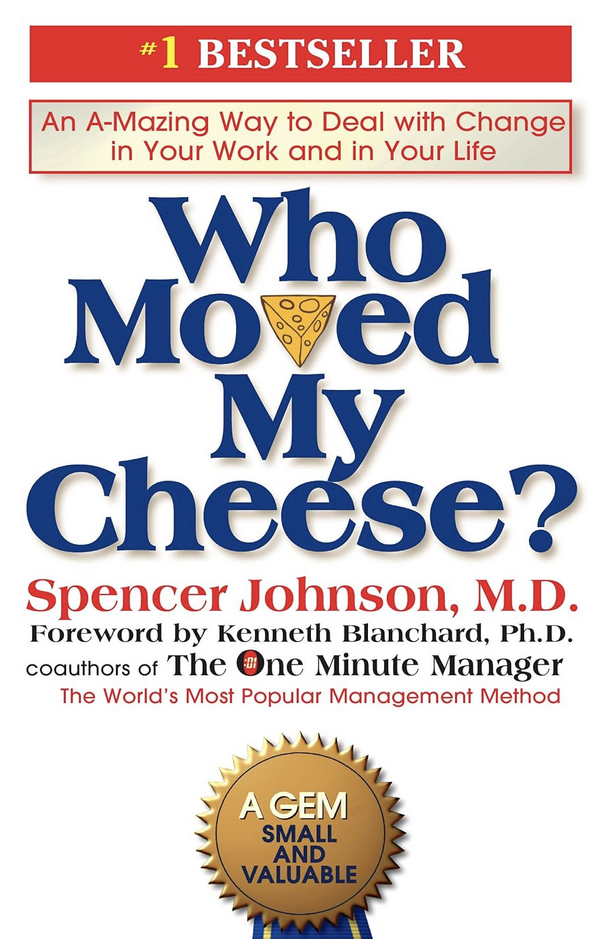
You’ve all probably read Spencer Johnson’s book. The mouse who survives isn't the one who waits at the empty station. He's the one who started moving before the cheese ran out. |
|
|
|
|
Free Knowledge |
Need more fodder for your late-career startup? An MIT study analyzed 2.7 million startup founders and found that a 50-year-old entrepreneur is twice as likely to build a massively successful company as a 30-year-old. A 60-year-old is three times as likely. |
|
|
|
|
Recommendations |
📕 MGMT Playbook : Practical management insights straight to your inbox every Wednesday. |
🗃️ Dealroom Business Success Uncovered : Learn directly from billionaire entrepreneurs on how to grow a business. Join a community of 2,000+ innovators. |
🔖 The StartUp Marketing Newsletter : Your cheat sheet for marketing news, insights & tips tailored for the startup space. |
|
|
Visual Crapshoot |
|
|
Help me help you: What's the #1 challenge holding back your late career side hustle?I'm creating resources specifically for late-career entrepreneurs. Which topic would help you most? |
|
|
|
|
Share Launch Key | The Newsletter for Late-Career Entrepreneurs |
Thanks for referring the Launch Key newsletter! 🚀 |
You currently have 0 referrals, only 1 away from receiving Free tools to launch your new idea or digital product. Instant PDF download with 1 referral. |
|
|
|
|
Or copy and paste this link to others: https://www.thelaunchkey.com/subscribe?ref=MRjCg0GwZI |
|
|
|
|
|
Launch Key readers – thank you for your support and feedback. I appreciate each and every one of you as I work to build something you value. Remember, if there's anything you'd like to share — a recommendation, a story idea, or just a note to say hi, hit the reply button and fire away. |
| |
| ~ Rob |
|
|