Tourist tax in Edinburgh (and beyond)
|
Talk of tourist taxes is usually met with a collective groan by travellers. After all, holidays are expensive enough without adding on extra charges. While the likes of popular European cities including Venice, Barcelona and Amsterdam have applied some form of taxes to overnight stays for years, Edinburgh is the first destination in the UK to introduce a city-wide tourist levy. The five per cent tax, which came into force exactly a week ago, applies to the first five nights staying in accommodation that includes hotels, self-catering apartments, bed and breakfasts, campervans, campsites, hostels, holiday lets and boats that stay in one place.
Practically, this means that if you spent £100 a night staying at an Edinburgh hotel (or any of the accommodation listed above), you would pay an extra £5 a night. So for a five-night stay your bill would be £525. For a seven-night stay your bill would be £725, as you would only pay the tax for the first five nights.
This all sounds simple enough, but things get a little more complicated when you take into account that the tax only applies to accommodation and not to any meals, drinks, transport or other services that might be included in the room fee. So if that £100 a night was for a bed and breakfast, then the cost of the breakfast would need to be deducted before the five per cent tax was calculated and added on.
Although Edinburgh is currently the only destination to introduce a city-wide tax, Glasgow is set to introduce a similar five per cent levy from January 2027, while Aberdeen is expected to follow suit with a seven per cent levy in April 2027. In Wales, following a new law passed last year, councils have the power to introduce their own taxes so long as they consult residents and local businesses, at a rate of £1.30 per person per night, or 75p per person per night (the lower rate applies to shared rooms in hostels, bunkhouses, bothies or dormitories, as well as pitches for tents). Cardiff is expected to be the first Welsh city to introduce a visitor levy, which will come into force from April 2027.
England has yet to introduce tourist taxes, but this may change soon thanks to a proposed law that would allow mayors and other local leaders the power to introduce a levy. Visitors to Liverpool and Manchester may notice that their accommodation already charges a small fee on overnight stays. This is a form of tourist tax applied via a legal workaround using an Accommodation Business Improvement District (ABID). In Liverpool, a £2 (plus VAT) charge is applied per room per night in the ABID area, while in Manchester those staying in guest accommodation in the ABID zone pay an extra £1 (plus VAT) per room per night.
On balance, I personally do not disagree with tourist taxes. Tourism places significant pressure on the infrastructure, facilities and local life of the destinations we visit, and it makes sense that we pay a relatively small amount to support the communities that host us.
Yet I was interested to hear the concerns of the Edinburgh holiday let owners that our travel writer Amelia Neath spoke to this week, who claimed that the tax was putting pressure on small business owners. They pointed out that it is the responsibility of the accommodation owners to work out the charge, with one holiday let owner describing the tax as “a highly complicated scheme that’s got lots of exclusions”. It sounds like a bureaucratic headache to me. Business owners also voiced fears that the tax could encourage the black market in holiday lets in Edinburgh, since the levy will be paid by licensed businesses while those which advertise without a licence will be able to dodge it.
Writing in The Independent this week, Rob Perkins from Responsible Travel argued that overtourism is a problem for cities like Edinburgh, but that tourist taxes are no “silver bullet” to fix it. However, he concluded: “The time to have this conversation is now, before the overtourism crisis gets worse. And if the new tourist tax gets people talking, then that can only be a good thing.”
Do you agree with tourist taxes? I’d love to hear your thoughts at annabel.grossman@independent.co.uk.
|
A five per cent levy will be charged on overnight stays in Edinburgh (Getty Images)
|
|
|
|
|
Gatwick airport first in UK to offer robotic parking
|
|
|
|
|
|
Eurostar to launch direct London to Belgium route
|
|
|
|
|
|
York B&B crowned the best in England
|
|
|
|
|
|
Tui floats out first Duoro river cruise ship
|
|
|
|
|
|
What Barcelona’s ‘not one tourist more’ plan means
|
|
|
|
|
|
How does one get their head down in the busiest city in the Western world?
|
|
|
|
|
With Meghan’s latest family holiday snaps, the secret is officially out, writes Victoria Harper
|
|
|
|
|
James Manning hopped aboard a brand-new overnight rail link to explore Germany’s underrated second city.
|
|
|
|
|
My ’nest’ is a mattress 2m long by 90cm wide – and I couldn’t be cosier, says Jacqui Merrington.
|
|
|
|
|
Would you be happy to pay a tourist tax on your UK break?
|
|
|
|
As Edinburgh becomes the first UK city to charge all visitors for staying overnight, I want to know if you're happy to pay a tourist tax on UK breaks? Is the five per cent fee a necessary cost? Or will you now book a staycation outside of the Scottish capital? Vote by selecting the buttons above.
|
|
|
|
|
It seems most readers aren’t ready to hand border checks over to the machines. When we asked whether AI-enforced border control is a good idea at airports, 62 per cent of you said no, suggesting many travellers still want a human in the loop rather than relying on Smart Gates alone.
|
|
|
|
|
Take out an Independent Premium subscription and unlock expert travel analysis, insider tips and the best deals to help you make the most of every trip.
Join now with our introductory offer: just £1 for 6 months
|
|
|
Are our phones a help or a hindrance when we travel? For most trips, I would find it near-impossible to function without mine – and I suspect many other travellers would say the same. I use my iPhone to book hotels on the go (since I rarely plan ahead); for GPS when driving or exploring a new spot; to take photos and videos; to check opening and closing hours; to find the best coffee in town; to listen to music when on the road… the list goes on.
But I’m also very aware that I often speak about being present in the moment when travelling. I find it so much more fulfilling when I make the effort to immerse myself in a destination without constantly checking my WhatsApp or taking a million photos to get the perfect Instagram-worthy shot.
This is something that writer Emma Henderson is also conscious of. In her article on The Independent this week she shared her experience of travelling phone-free on a city break to Lisbon. By going “analogue” and switching to a Fujifilm disposable camera from Argos to take photos, Emma found that she moved at a slower pace through the city, thought more carefully about the photos she took, and really appreciated her surroundings.
Although there were some drawbacks to not being able to take as many photos as she liked (not to mention that the costs of using a film camera can quickly add up), Emma wrote that the experience “did make me realise how many of my adventures are seen directly through a screen, and reminded me how analogue photography can be tangible and intentional – all elements of travel that are being ebbed away in our digital world”. Emma added: “Being forced to slow down and having a time-lapse between the trip and receiving my photos made it clear that the photos were the real souvenirs of my trip.” I would also argue that using a disposable camera allowed her to take some pretty great pictures of the city – check out her photo of the Tagus River across city centre rooftops. No filter needed.
A couple of years ago I tried something similar – although in a very different environment – when I ditched my phone for a five-day hike across northern Sweden, relying on a film camera for photos, and having zero access to emails, messages and social media. Although I’m not planning to go “analogue” anytime soon, I would fully recommend trying a phone-free trip, or even having a couple of phone-free days. The experience reminded me to be present in a destination and not constantly look forward to the next meal, activity or hotel.
Read Emma’s full article on going ‘analogue’ in Lisbon
|
|
|
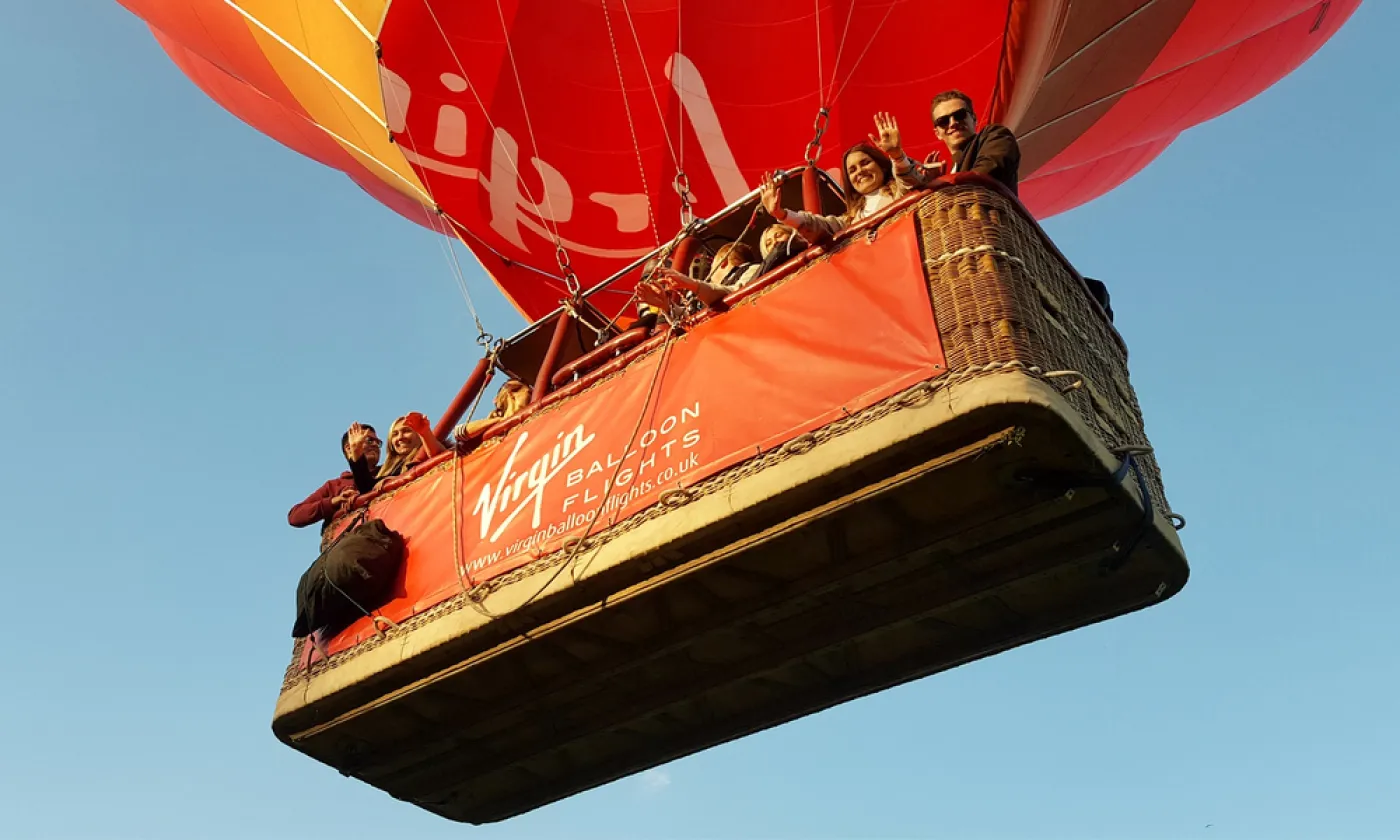
Save on a Virgin hot air balloon flight
|
|
|
|
|
Take life higher with spectacular views, then toast your adventure with a celebratory glass of Prosecco once you touch back down. Enjoy a 3-4 hour experience with about an hour in the air. Find out more.
|
|
|
|
|
4* DoubleTree Cadbury House Spa Stay from £79
|
|
|
|
The Gironde region of southwest France was unequivocal in its message to tourists this week: do not come. As horrific scenes emerged of wildfires raging in the region, 20 kilometres from Bordeaux, Sophie Brocas, the prefect of the Gironde department, said: “I urge tourists not to come to this region, at least until the situation is under control.” Flights continue largely uninterrupted in and out of Bordeaux airport, although the hotel zone was evacuated earlier this week and is yet to fully reopen. Ms Brocas added: “I encourage tourists who are already here to consider another destination.”
This advice is specific to the Gironde region and tourists should still be able to travel safely to areas of France unaffected by wildfires. Last weekend, Éléonore Caroit, the minister for international partnerships, said that tourists should continue to visit France as long as they remain well-informed. She told BBC Radio 4’s Today programme: “You have entire areas that are fine; you’re seeing similar phenomena in Spain and other countries. I’m in Paris, and nothing is happening, and most other regions are OK, so do please come to France and do not cancel your travel plans.”
At the time of writing, the UK Foreign Office (FCDO) has not warned against travelling to any areas of France, including those affected by wildfires. The advice currently states: “Access to affected areas may be restricted, roads may close at short notice and further evacuations may take place. If you are in the area or planning to travel there, follow the advice of local authorities, monitor local media, and check with your accommodation or travel provider before travelling.”
Since the FCDO has not advised against travel to the country, holidaymakers may struggle to get a refund for a trip not taken, although they may be able to change the departure date. The best course of action is to speak with your holiday provider or hotel to discuss your options. If you have travel insurance, check the wording of your individual policy carefully to see if you have trip disruption or natural disaster cover.
|
|
|
From the imposing fells surrounding Cumbria’s lakes to the sculptural sea cliffs of Dorset’s Jurassic Coast to the golden sands of sickle-shaped beaches dotted along Pembrokeshire’s shores, there’s no shortage of dramatic scenery that can be best admired from UK waters.
If you’re keen to get out into the fresh air for some aquatic adventures this summer, inflatable kayaks can be easier to transport than their rigid hard-shell counterparts. We’ve been busy putting a range to the test off Brighton Beach, with Wave’s ‘the roamer’ gaining a glowing review, thanks to its durability, stability and value for money.
Once back on terra firma, a changing robe is worth having to hand, whether you’ve been kayaking, paddle boarding or wild swimming. We rate Red’s ‘alter evo’, Saltrock’s recycled changing robe and Mountain Warehouse’s ‘tidal’ robe, all of which will keep you warm and cosy after a dip.
If you prefer to be by the sea without setting so much as a toe in the surf, deck chairs and beach towels may be on the cards instead. Dock & Bay’s colourful designs are practical options that deliver a real dopamine hit. Pack a cool bag – our reviewer raved about Stanley’s 1913 all-day Julienne design – top up the sunscreen, dive into a good book and leave the paddling to someone else.
|
|
|
Latest lifestyle headlines from Bulletin: |
|
|
Join the conversation and follow us
|
|
|
Please do not reply directly to this email
You are currently registered to receive The Independent's Travel newsletter.
To unsubscribe from The Independent's Travel newsletter, or to manage your email preferences please click here.
This e-mail was sent by Independent Digital News and Media Ltd, 14-18 Finsbury Square, London EC2A 1AH. Registered in England and Wales with company number 07320345
Read our privacy policy and cookie policy
|
|
|
|



















No comments:
Post a Comment
Keep a civil tongue.