
Fund independent journalism |
|
|
|
|
|
| This newsletter is supported by AXA Health |
 |
|
|
 |
|
|
|
Home tests for cervical cancer, wild beaver babies and more uplifting stories
|
|
|
Good morning.
The NHS aims to eliminate cervical cancer by 2040, but up to 4 million eligible women are not up to date with their screening.
There are “lots of reasons” women don’t attend their cervical screening appointments, says Dr Sue Mann, national clinical director for women’s health at NHS England. But now, eligible women between 30 and 65 who have not attended screenings will be invited to order a home testing kit containing a swab to collect a sample from the vagina. The sample can then be posted off, free of charge, to be tested for high-risk human papillomavirus (HPV), which can cause cervical cancer. If high-risk HPV is detected, patients will be asked to attend a cervical screening appointment with a clinician.
“Offering millions of women an alternative test … will be a gamechanger,” says Mann. “It’s a simple swab you can do at home in minutes.”
Read on for more uplifting stories from the week.
The Guardian newsletters team
|
|
|
|
|
|
|
|
Manuscript fragments hiding in plain sight shed light on medieval Guernsey’s literary life
|
|
|
|
 The fragments were identified by Island Archives staff working alongside two outside experts. Photograph: Max Rhydwen-Jones/States of Guernsey.
|
Seventeen medieval manuscript fragments discovered in Guernsey are shedding new light on the island’s previously unknown literary life, reports Dalya Alberge. Dating from the 12th to 15th centuries, the texts range from the Bible and Ovid to a rare French play, revealing surprisingly broad reading tastes. The fragments survived after being recycled as bindings for administrative records – and researchers believe many more may still be hiding in the island’s archives.
|
|
|

| |
|
|
The Feast app: your most useful kitchen utensil
Get inspired with more than 7,000 recipes from our world-class cooks and smart, exclusive features to make cooking a breeze.
|
|
|
|
|
|
| |
|
|
|
|
|
|
Wild beaver kits born in Norfolk for first time in more than 500 years
|
|
|
|
The two wild beaver kits captured on camera at the Pensthorpe nature reserve in Norfolk. Photograph: Pensthorpe Natural Park
|
The mysterious arrival of two wild beavers in the Pensthorpe nature reserve near Fakeham last December marked the first time the species had been recorded in Norfolk since being hunted to extinction in the 16th century. Now, conservationists at the reserve are celebrating an even more joyous arrival – a pair of newborn kits.
Richard Spowage, manager at Pensthorpe, says the three-month-old kits, the first born in the county for more than 500 years, are “very playful” and enjoy feeding on willow and water mint. Pensthorpe is now crowdfunding an application to Natural England for permission to legally introduce wild beavers into the region.
“Reintroducing beavers to our landscapes makes a huge difference to nature’s recovery and where releases are managed carefully, they can secure long-term environmental benefits,” says Matt Heard, spokesperson for Natural England.
|
|
|
| Advertisement |
|
 |
|

|
|
|
|
|
The groups reinventing a Polish folk dance for the modern age
|
|
|
|
‘Forgotten history’ … Tercet Imperial. Photograph: Marek Kita
|
Poland’s rural folk music has a turbulent history. Once a mainstay of celebrations and rituals, passed down by ear, its continuity across the country’s regions was disrupted by war and migration, before the communist era brought a different, state-sanctioned version of folklore.
But now, the music of the oberek, a traditional dance in which couples whirl around the dancefloor, is being reconfigured by a new generation of artists: the band Tercet Imperial weave traditional melodies and lyrics into contemporary production, replacing violins with synthesisers.
Nowadays, traditional music is increasingly “treated as part of our own heritage and the forgotten history of the majority of society,” says Tercet Imperial’s drummer Gary Gwadera. “It has become a response to the need for a sense of community.”
|
|
|
|
|
|
|
|
‘I sought out rejection. Instead, strangers met me with profound generosity’
|
|
|
|
‘My first challenge’ … Sophie Jones making coffee in Warrington. Photograph: Courtesy of Sophie Jones
|
Sophie Jones used to feel like her fear of rejection was holding her back. So she decided to do something extreme about it: she would actively seek out that which she once hid from, and for 30 days intentionally put herself in situations where she expected to be met with a blunt “no”.
Yet whether it was asking her local barista if she could make her own coffee, or approaching strangers and requesting to join in with what they were doing, Sophie’s experiment didn’t go anything like the way she imagined. “Time after time, I was exposed not to rejection, but the heartening kindness of humans who owed me nothing,” she says. “Instead of simply learning to cope with humiliation, I instead discovered rejection to be relatively rare.”
|
|
|
|
|
|
|
|
Chappell Roan, Shirley Manson and Eli on playing Olivia Rodrigo’s women-led festival
|
|
|
|
‘We’re at a crisis point’: Shirley Manson, Chappell Roan, Olivia Rodrigo and Eli. Composite: The Guardian/Getty Images/Charlotte Rutherford
|
Music festival lineups have always suffered from gender imbalance – a 2025 report found that women accounted for just 21.6% of headliners across nine major festivals.
Thankfully, a number of women-led music festivals have tried to redress that stubborn imbalance while also raising money for good causes and, this Saturday in California, US singer-songwriter Olivia Rodrigo’s Daisy Chain Fields joins that lineage. Featuring chart-toppers such as Chappell Roan, newer acts such as Eli, and artists who have influenced Rodrigo, such as Stevie Nicks, 100% of its net proceeds will go to Planned Parenthood, the Center for Reproductive Rights and similar organisations.
“Olivia gives me hope that we can lead our generation and generations to come to a harmonious earth filled with strange girls and happy hearts,” says Eli.
|
|
|
|
|
| When my teenage son was struggling, my partner reached him in ways I couldn’t |
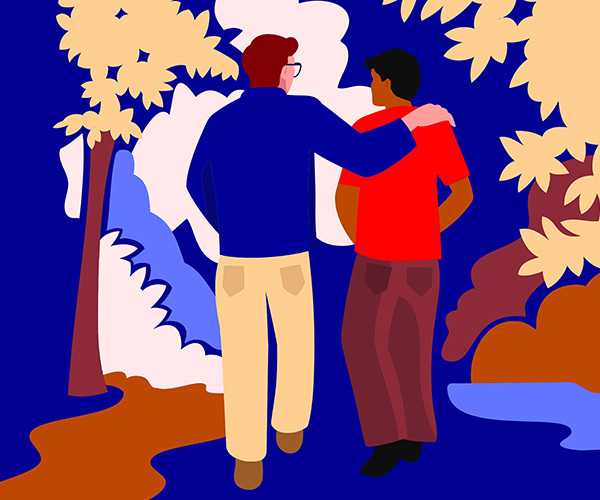 |
After a catastrophic falling out with university friends, Lola’s 19-year-old son was struggling to see the light. Enter Lola’s boyfriend, who made all the difference – connecting with her son and helping turn things around. It was a learning experience for the whole family, Lola included: “Watching you step in taught me that I didn’t always have to be the one to fix things,” she says. Here, she thanks her boyfriend from the bottom of her heart.
|
|
|
|

|
|





No comments:
Post a Comment
Keep a civil tongue.