It's inadvertent Apple week on PC Gamer… | ARM-based processors are coming for traditional PC gaming so we've tested Apple's ARM-y MacBook silicon to see how well it plays games in 2024 | Why you shouldn't expect Apple's new uber-bright 1000-nit 'Tandem' OLED screen tech to hit the PC any time soon
Created for ignoble.experiment@arconati.us | Web Version
Look, it's not like we intended it to come out this way, but we've accidentally been talking a lot about Apple at PC Gamer this week. And it's not just because our Jeremy is obsessed with them and won't bloody shut up about how lovely his MacBook Air is with its lowly M1 chip (though he'll tell you it's better than M2 and M3 as they're too "Intel-y" in his words).
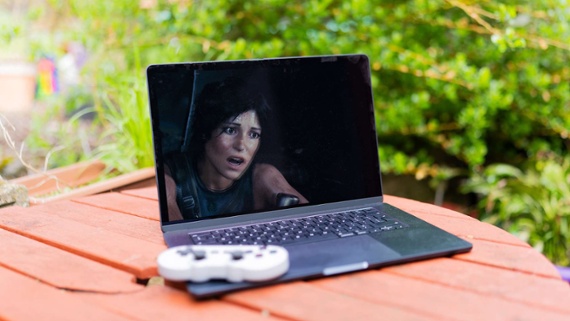
First off, dammit, they're PCs in the very personal computer sense of it all, and so why the hell shouldn't we talk about their gaming performance? So we have. Ian's been taking an Apple M3 out for a spin around the gaming world, throwing Baldur's Gate 3 and Resident Evil 4 at it to see what gives.
And the hardware does pretty damned well, seemingly more or less as capable as the best iGPU AMD can throw out into the wild. Though the hardware isn't really the problem, it's the fact that most games are developed for either just the x86 or Windows environments, or both. And that's the problem that we're going to see with other non-x86 chips being thrown into the PC space.
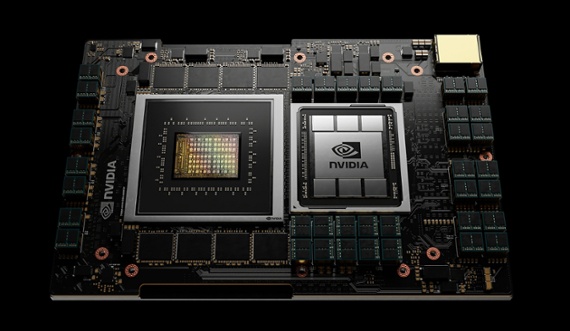
That's now happening, with Qualcomm's Snapdragon X Elite CPUs arriving in the summer, and Arm CEO Rene Haas has seemingly confirmed that we'll have more companies joining them: "There are going to be multiple suppliers to serve that market over the next 12 to 36 months." And you've got to think Nvidia is odds-on to be one of them.
But they've all got to fight through abstraction layers and emulation to get to their peak performance levels when it comes to gaming. And that will be the ultimate challenge.
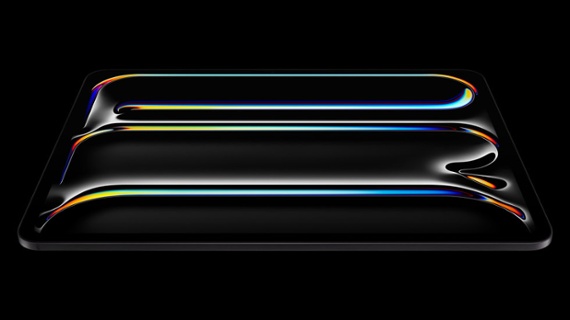
Apple's also unveiled the new iPad with the most technologically advanced display yet… which is never likely to find an analogue in the PC monitor market. Sad face. There were more sad faces around Apple's tone deaf advert which copied an old LG ad in crushing musical instruments and art supplies, suggesting that's what was going into the new device.
Nobody apart from Tim Cook seemed to like it, and Apple had to apologise: "We missed the mark with this video, and we're sorry."
We've all incurred the wrath of the IT department of a major UK newspaper group subsidiary by organising games of Cro Mag Rally over a network of Apple G4 Cubes while we were supposed to be working, haven't we? Just me? Okay. Mac gaming is definitely not as popular as the PC variety, but it still hangs on. It almost looked at one point, when early Xbox 360 devkits were presented as Apple G5 towers, that the Mac might even be in for a gaming renaissance, but it never came to pass.
Apple has rolled out its latest iPad Pro and apart from the new M4 chip, which is pretty interesting in its own right, the highlight is undoubtedly its new dual-layer OLED display, known in Apple parlance as Tandem OLED. Capable of 1,000 nits sustained full-screen brightness and 1,600 nits peak HDR, it blows away any OLED PC monitor for sheer brightness. Even the best current OLED large-format desktop panels top out at about 250 nits full screen.
After making a lot of people very mad at it, Apple has apologized for a new advertisement and says it's scrapping plans to air the minute-long spot on TV. The ad, called "Crush," is meant to emphasize the thinness of Apple's new iPad Pro, and features a pile of media devices and art-making tools, including cameras, a piano, and paint cans, being squashed into a thin film by an inexorably descending metal plate.
Qualcomm's Snapdragon X Elite chip is one of the more intriguing prospects for the PC over the next 12 months. Now Arm's head honcho has revealed that there will be more PC-optimised CPUs incoming over the next few years. One immediately intriguing option for a new entrant into the Arm CPU for PC market could be Nvidia. But hold that thought, we'll come back to it.
Gigabyte has created an excellent ultrawide QD-OLED gaming monitor that focuses on what's important to keep the costs down. It's not cheap, but it's cheaper than rivals which might have more bells and whistles but which provide few benefits. There are faster screens out there but this isn't slow.








No comments:
Post a Comment
Keep a civil tongue.